
ABOUT
Established in 2019, SYMAIR COMMUNICATION TECHNOLOGY (XI'AN) CO., LTD is a provider of indoor distribution antenna system (DAS) for mobile communication. Our products include RF feeder cables, air insulated feeder cables, RF jumper cables, indoor antennas, base station antennas, stadium antennas, as well as various types of inbuilding system (IBS) devices such as power splitters and couplers. The company meets the operational requirements of the ISO9001 system, and its related products have obtained RoHS/CE certification. Its main markets include countries and regions in Asia Pacific, Eastern Europe, Africa, and the Middle East. The core management team of SYMAIR has nearly 20 years of experience in the telecommunication industry, and its team members come from the technical and management departments of frontline companies. We are good at providing customers with products and solutions that meet industry quality requirements and have competitive pricing advantages, in order to maximize customer benefits. We offer an extended 5-year after-sales warranty period, during which we provide customers with free replacement services. This is not only our confidence in product quality, but also our hope to convey this confidence to customers through this means. We continuously optimize the supply chain to achieve our customers' rapid delivery goals. We have made additional investments in product packaging to ensure that the goods are safe and secure during transportation, ensuring the interests of our customers. SYMAIR's goal is to create value space for customers and become a long-term and reliable partner. We look forward to your contact!https://www.symair.com
HOME
CONTACT
Tel:+86-13109595859
E-mail: sales@symair.com
Address: Block A, Chang'an Culture Center, Chang'an District, Xi'an, China
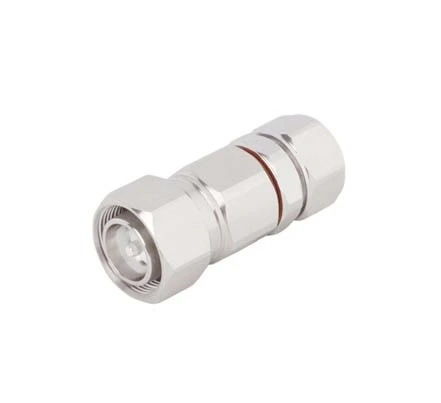
Feeder Connector
SYMAIR Feeder Connectors are field-installable RF connectors designed for on-site termination of corrugated coaxial feeder cables. Unlike factory-terminated assemblies, they allow installation teams to cut cables to the exact required length on-site, connect directly to any port, and complete termination without specialist factory equipment. SYMAIR's feeder connector lineup covers cable sizes from 1/2" through 1-5/8", and supports three major interface standards — 4.3-10, 7/16 DIN, and N-type — making them compatible with the full range of SYMAIR foam and superflexible coaxial feeder cables.
How to Select the Right feeder cable connector
When specifying a feeder connector, three parameters determine compatibility:
1.
Cable diameter — Match the connector to the exact outer conductor size (1/2", 7/8", 1-1/4", or 1-5/8"). A mismatched connector will not clamp correctly and will degrade VSWR.
2.
3.
Interface type — Choose 4.3-10 for modern DAS and RRU connections; 7/16 DIN for high-power outdoor base station applications; N-type for indoor DAS and lower-power indoor runs.
4.
5.
Orientation — Right-angle variants are available for installations where a straight connector would exceed the cable's minimum bend radius or conflict with enclosure geometry.
6.
If your project requires a specific cable-connector combination not listed above, contact SYMAIR's engineering team at sales@symair.com.
What Are the Advantages of Feeder Connector?
- Efficiency
Field installable RF connectors are typically designed to be easy and quick to install, without the need for complex tools or equipment, which can significantly reduce installation time. For example, SYMAIR's field installable RF connector can be installed on cables in just a few minutes, saving a lot of time compared to traditional installation methods.
- Flexibility
Field installable RF connectors typically have flexible cable lengths that can be adjusted according to actual needs without the need for customization, which increases installation flexibility.
- Cost savings
Due to the fact that field installable RF connectors can be installed on demand, enterprises can reduce the inventory of cable assemblies and lower inventory costs.
What Frequency Bands Can Feeder Connector Support?
Field installable RF connectors can support a wide range of frequency bands, which mainly depends on the type, design, and performance parameters of the connector. Different types of connectors have different operating frequency bands. Here are some common types of field installable RF connectors and their possible supported frequency ranges:
N-type connector:
The original design was intended for military systems below 4GHz, but with improvements, its performance can be pushed up to 12GHz and even higher up to 18GHz. This type of connector is typically used in wireless devices that require higher power and lower frequency.
SMA connector:
Suitable for lower to medium frequency ranges, typically up to 18GHz. Due to its compact size and excellent performance, SMA connectors are widely used in wireless communication and testing instruments.
4.3-10 Connector:
As a new type of RF coaxial connector, its design aims to replace traditional DIN 7/16 connectors. The supported frequency range is wide, usually up to 0-12GHz, depending on the design and manufacturing standards of the connector. This connector has the advantages of low PIM performance, high reliability, and compact size, making it particularly suitable for modern wireless communication base stations and antenna systems.
Key Performance Features & Applications
SYMAIR feeder connectors meet these requirements through precision-machined inner conductors, robust clamping mechanisms that grip the corrugated outer conductor securely, and sealing rings that prevent moisture ingress at the interface.
Key performance characteristics:
50 Ω impedance, matched to standard RF coaxial feeder cables
Low VSWR across DC to 3 GHz operating range
High-quality brass body with silver-plated and ternary alloy outer surface
Compatible with indoor and outdoor applications, including tower-mount and tunnel environments
For a deeper understanding of how feeder cables and their connectors work together in an RF system, see our technical guide: Feeder Cables: Uses in RF Systems.
For more information about power tappers, please feel free to contact us!
If you are looking for a reliable distributed antenna system manufacturer, please contact us.
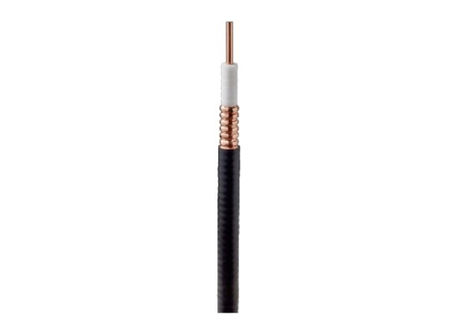
Foam Coaxial Feeder Cable, Corrugated Copper, 1/2 in, Black PE Jacket
Excellent impedance matching design, low VSWR across an ultra-wide frequency range.
Low loss design makes efficiency signal transmission.
Optional PE, FRNC, and LSZH outer jacket to cater to different usage environments.
Specification of Foam Coaxial Feeder Cable, Corrugated Copper, 1/2 in, Black PE Jacket
For more information about coaxial feeder and power tappers, please feel free to contact us!
There are many distributed antenna system suppliers, but we are one of the best choices for you.
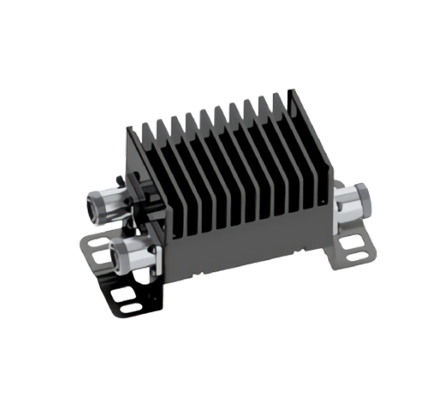
Hybrid Combiners
SYMAIR Hybrid Combiner: Where Combination Meets Efficiency. Discover the pinnacle of signal management with SYMAIR's Hybrid Combiner. Expertly designed to merge multiple signals with unparalleled efficiency, this advanced solution ensures optimal performance and minimal signal loss. Trust SYMAIR to deliver the perfect blend of innovation and reliability for your communication needs.
SYMAIR hybrid combiners are designed to combine multiple RF inputs into shared output paths for cellular and passive DAS networks. When configured for common 4G frequency ranges, they can be used as an lte combiner to integrate signals from different base stations, operators or sectors into a common distribution system.
What Is SYMAIR Hybrid Combiner Used For?
A hybrid combiner is a device used in various fields, particularly in telecommunications and signal processing. Its primary function is to combine multiple signals or sources into a single output with high efficiency. In cellular networks, hybrid combiners are used to merge signals from different antennas or frequency bands to enhance signal strength and coverage.
How to Choose Between Hybrid, Same-Band and Multi-Band Combiners
The appropriate RF combiner depends on the frequency relationship between the input signals and the required system configuration.
Hybrid combiners are commonly used to combine signals from multiple base stations, operators or sectors while maintaining good isolation between input ports. They are particularly useful when the signals operate within the same or overlapping frequency ranges.
For applications that require multiple signals within the same frequency range to share one output path, explore our same band combiners. If the system needs to combine several separate frequency bands while maintaining frequency-selective isolation, a multi band combiner may be more suitable.
Depending on the network architecture, hybrid combiners can also be integrated into a broader DAS combiner configuration for indoor cellular coverage, multi-operator signal integration and shared RF distribution.
For more information about power tappers and feeder cable connector, please feel free to contact us!